What do prediction markets, sports betting, and Roblox have in common? They all make young men more susceptible to scams.
One of my major research projects involves AI and scams, and I’ve been thinking about what the future of this work might look like. My project partner Lana Swartz and I want to examine how gamblification logics make young people more susceptible to scams. Specifically, I’ve decided to look at three things: “loot boxes” (probabilistic video game assets – you pay money, you don’t know what you get, you might get something awesome or something mundane, my son’s Roblox life is full of them and I’ve overheard some very strange conversations talking about how much he and his friends can sell rare “brainrots” on the apparently thriving secondary market— heavily peppered with “BRO!”), sports betting, and prediction markets. I’m fascinated by all three of these.
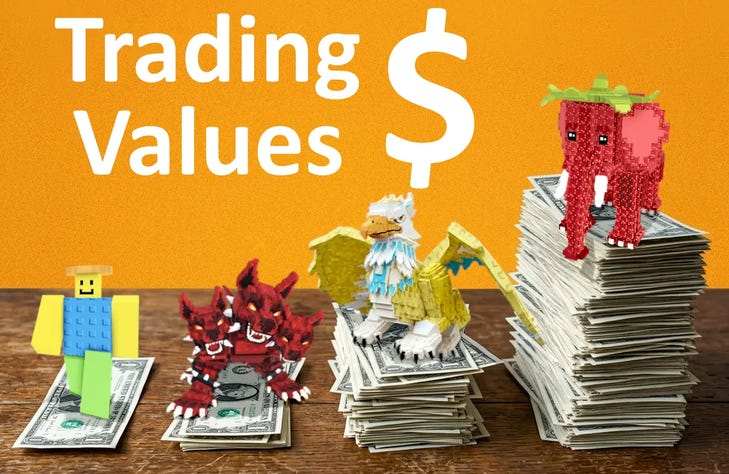
The website ElDorado lets kids sell their “rare brainrots” (in-game assets from the Roblox game “Steal a Brainrot”) for “real money.” Target audience here is 10-15 year olds.
Sports betting is legal in some (but not all states) for 21+, but prediction markets are legal at the federal level and you only have to be 18 to participate. Unsurprisingly, sports betting is moving rapidly onto platforms like Polymarket and Kalshi (the gambling industry HATES this). Believe it or not, these platforms are considered derivative markets, not gambling, and so they are regulated by the Commodity Futures Trading Commission, which, as you might guess by its name, regulates commodity futures at the federal level. This is because courts decided that contracts paying out on future events look like derivatives, not wagers (which IMO is bananas).
Kalshi, one of the two main prediction market companies along with Polymarket, sued the CFTC in 2024, arguing that they should be able to let people bet on elections. They won, and a DC district court ruling basically held that the CFTC can’t block “event contracts” just because they’re politically sensitive. That created a crazy explosion in prediction market betting, which went from $100M to $21 billion in under two years. But the CFTC is a financial markets regulator. It’s typically making regulations to protect professional traders, not 19-year-old college students who learned about Polymarket on TikTok.

Image via Shutterstock c/o The Gambling Clinic
I talked to one of my former students, Parker Bach, who did his MA with Lana at UVA and is now writing a dissertation at UNC on prediction markets. He’s doing ethnography on prediction market enthusiasts in NY, DC, and SF. In NYC, they’re finance professionals who think they understand arbitrage. In DC, they’re political insiders who think they have the scoop. And in SF, they’re into “collective wisdom” and think prediction markets are the best tool for determining public opinion. Unsurprisingly, he said there’s about a 30:1 gender ratio in favor of men. Neither sports betting nor prediction markets are good money-making sources: a new report just found that less than 1% of people on prediction markets make about 50% of the money; and I bet those people aren’t teenagers.
So why/how does this make young people more susceptible to scams? First, let’s put a myth to rest: young people are not scammed less than older people. They fall for scams at about the same rate. But they lose less money than older people, because they have a lot less money. They also fall for different scams: job search scams, in-game scams, online shopping scams. Older people are far more likely to be scammed over the phone or by a sweepstakes scam (do young people even know what a sweepstakes is?).
Young people are really stuck. They don’t trust old ways of obtaining financial security (spoiler: because they don’t work); job searching has been decimated by AI (mostly because of recruiting/automated denials than AI eliminating jobs); and in the US, 49% of them are living with their parents. This forces them into informal economies—the so-called “hustle and grind” culture— where they’re learning from finfluencers and YouTube videos on how to get ahead, because legitimate job opportunities simply aren’t there. Memestocks, crypto, affiliate marketing bootcamps, KDP publishing, OnlyFans, credit card churning, drop-shipping courses, and MLMs are all shady-ass, risky activities that are squarely aimed at people with few conventional options. Meanwhile, everything gets more and more expensive. Not very surprising young people would be willing to take further financial risks.
Meanwhile, these gambling logics are pushed into youth culture— more specifically, young men and boys’ culture— at every level. This is tremendously destructive. A kid growing up on loot boxes will be more susceptible to problem gambling later on. Young men in states where sports betting is legal have worse credit ratings than their equivalents in other states. And prediction markets let people gamble on everything from The Odyssey’s opening box office to how many times Elon Musk will tweet this week; yet fewer than 1% of users reap 50% of the profits.
When we think about scams, we need to think beyond individual susceptibility and to the larger, structural factors that make people vulnerable. The prevalence and normalization of gamblification is absolutely one of these factors. And given the current administration’s deep ties to crypto and prediction markets, it’s unlikely that the US government will step in to help. Meanwhile, AI is ramping up the scale and scope of scams on every level. Rather than banning social media, we could do a lot for the mental health of young men by regulating these spaces.
the culture roundup
- Very much enjoyed Brooke Harrington’s 2008 book Pop Finance about 90’s investment clubs, groups of regular people who bought stocks together and tracked their gains. “Investor” was— and is— a high-status identity. By participating in investment clubs, these folks could tell a story about themselves as savvy financial whizzes – even though most of them lost money.
- Reading: The Cradle series by Wil Wright. If you’ve even so much as dipped a toe into the world of LitRPG/progression fantasy (usually by way of Dungeon Crawler Carl), you’ve heard of this series, widely considered the GOAT. If you haven’t, it’s a thirteen-volume series about a young man named Lindon who goes from magic-less outcast to totally OP (over-powered, in LitRPG jargon) in, well, thirteen books. I love progression fantasy, I love chonky series (the more volumes the better), and I’m really enjoying Cradle, despite heavy cribbing from manga/anime tropes I’m not at all familiar with. If you don’t like plot-driven, wish fulfillment fantasy, you won’t like this. (I do, so I do.)
- Watching: old seasons of the Amazing Race, the limp end of All Stars 11, and Canada’s Drag Race All-Stars S1, which has an amazing cast.
- Listening: Olivia Rodrigo’s unbelievably good new album; reviving my lifelong Madonna fandom with Confessions II; Slayyyyter’s Wor$t Girl in America.
- Bought myself that Realisation Par skirt all the influencers were wearing 5 years ago from Poshmark for $75.
- My Critical Shopping Studies group chat is carefully watching the Phia scandals.
- Academic to-read list: this paper by Muyang Li analyzing how r/conspiracy views algorithms (suspiciously) and Fenwick McKelvey’s new book about the history of computational simulations of democracy.